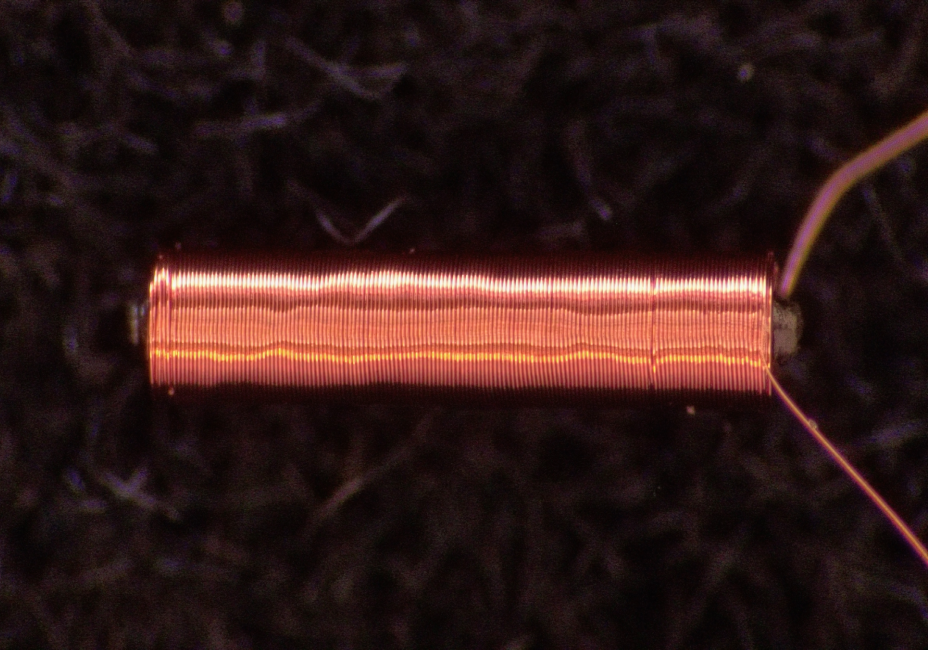
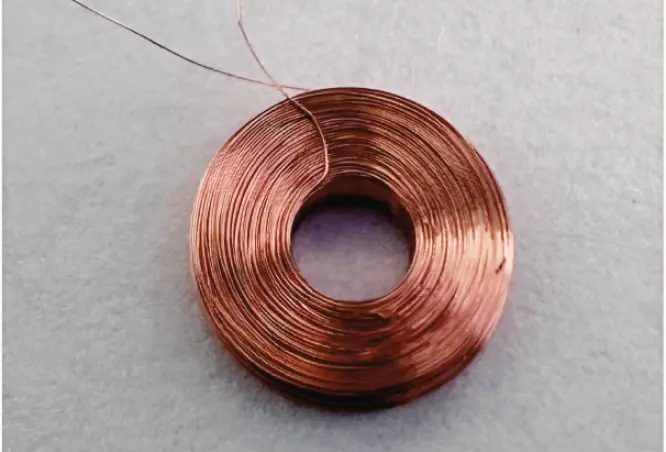
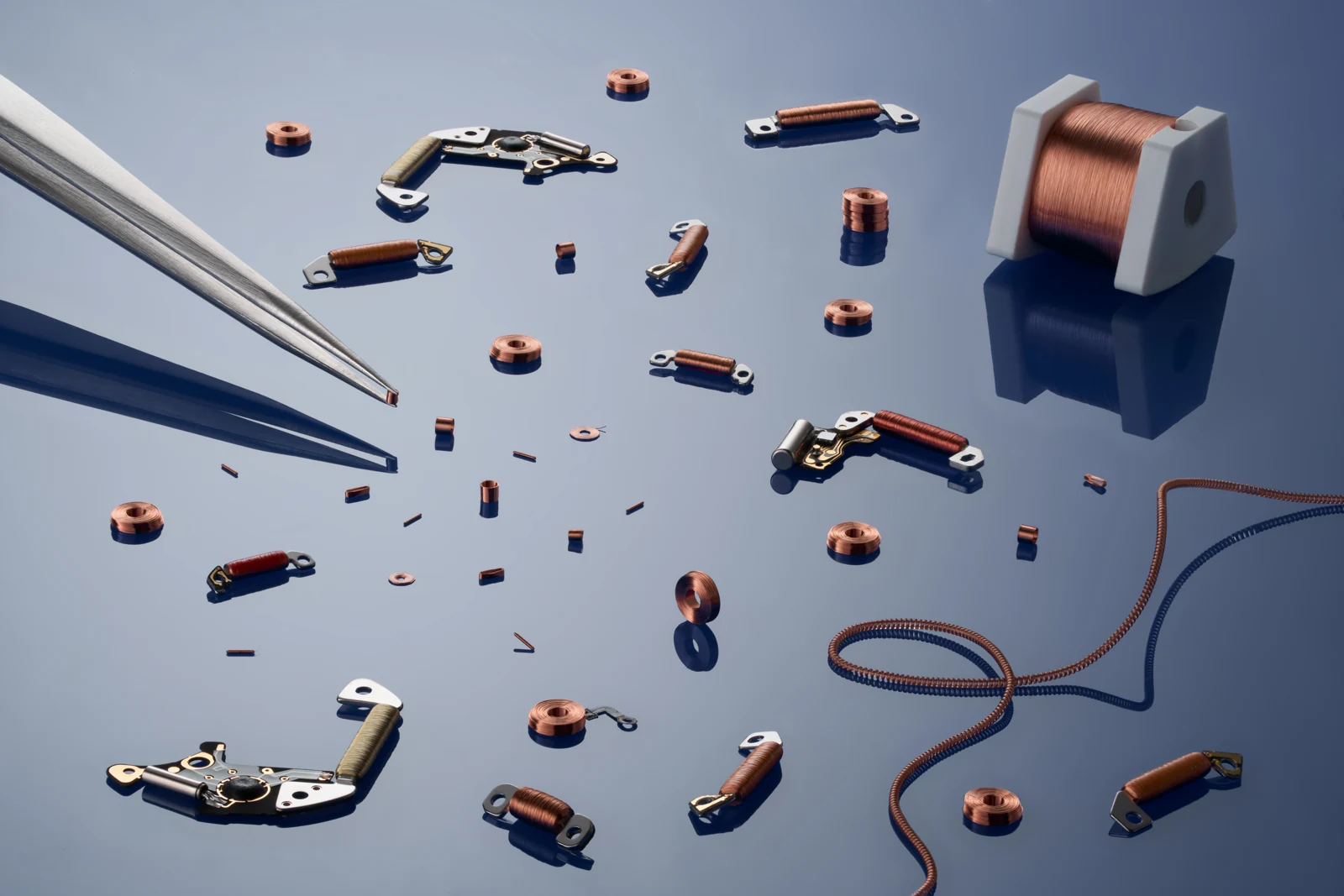
Coreless (air) coils
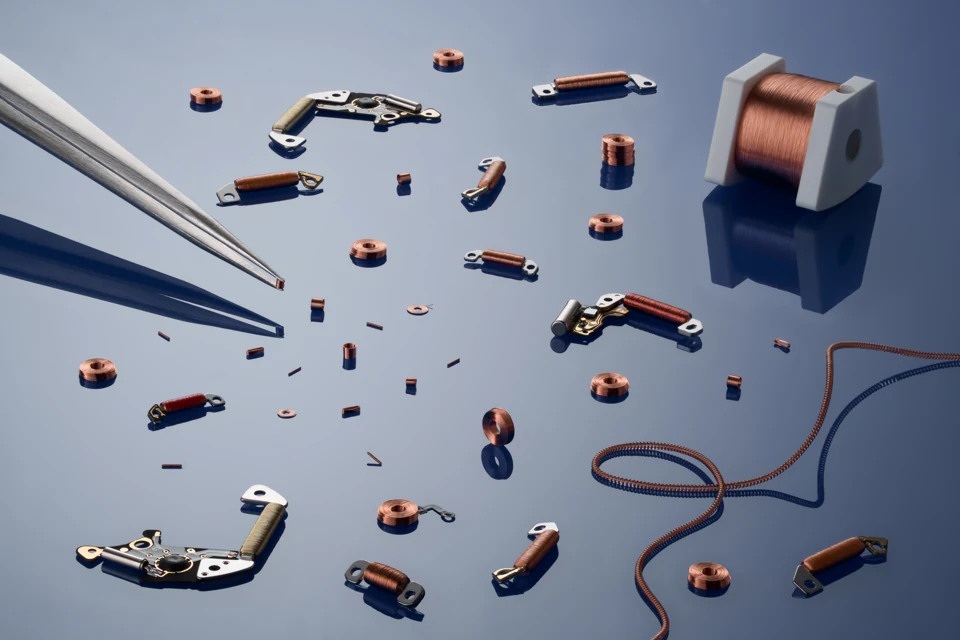
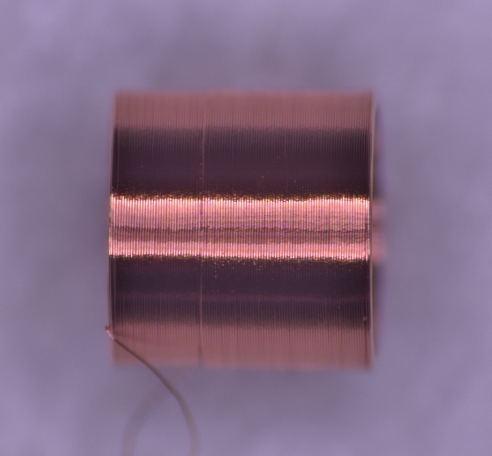
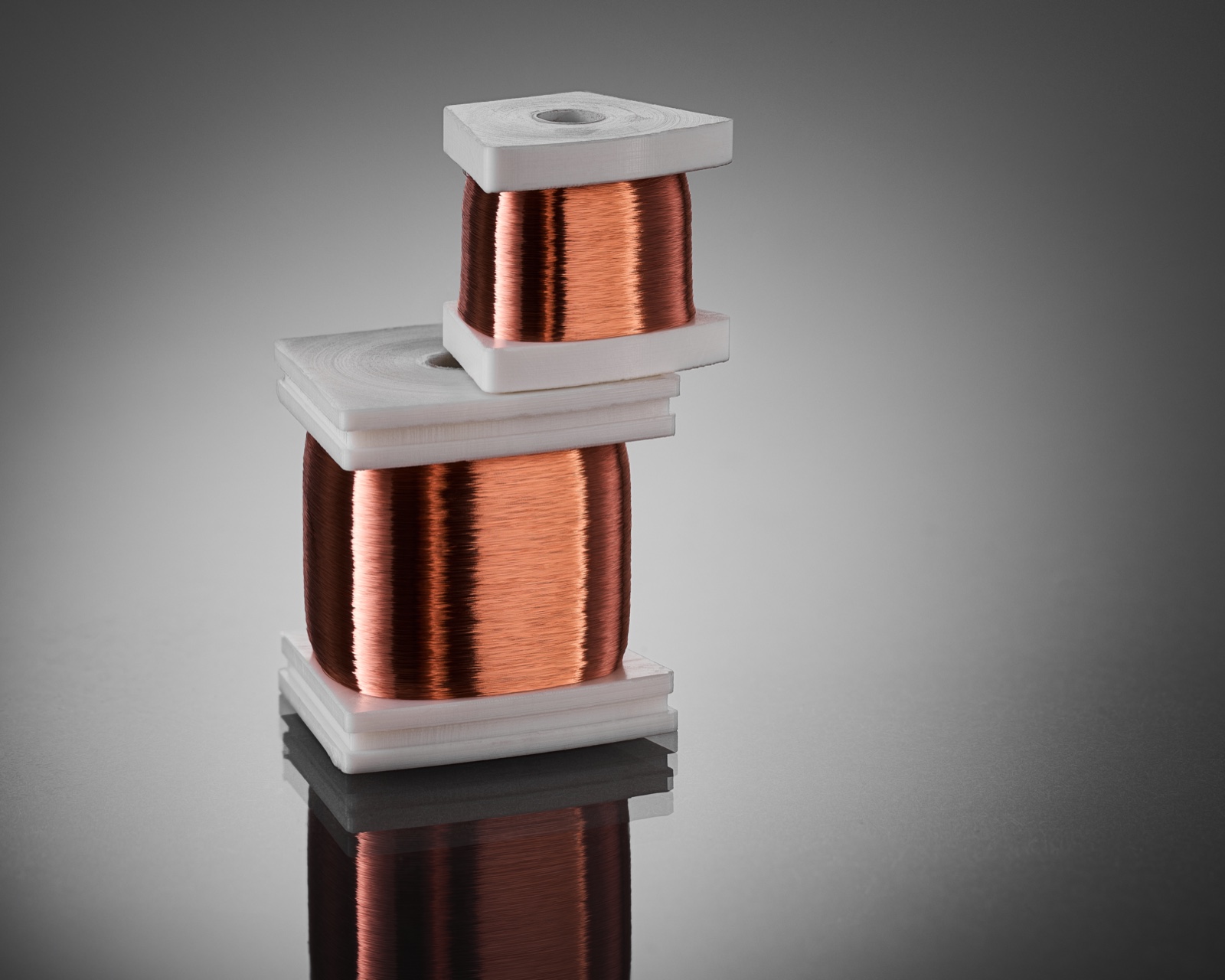
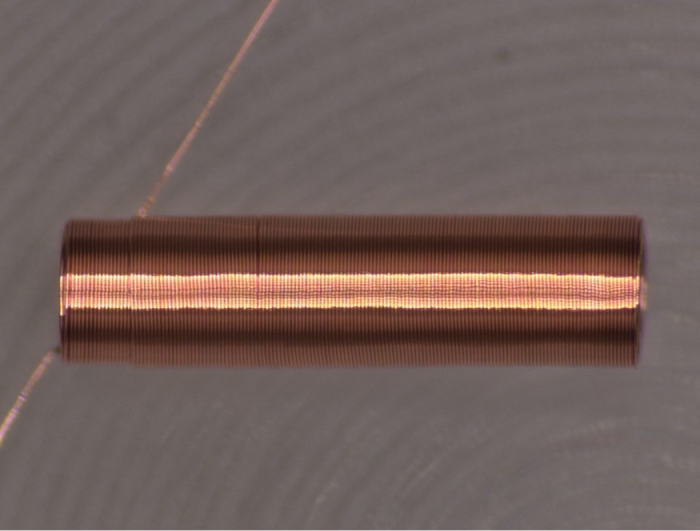
Copper wire wound without a permanent core, in cylindrical, elliptic, helical and flat-wound geometries.

Products / MICRO NANO TECH
Compact wound components: coreless coils, coils on cores and coil modules.
Winding geometry, core and electrical properties are selected for your application.
At a glance
Dimensions, tolerances and performance are agreed for your part and confirmed in the quotation.
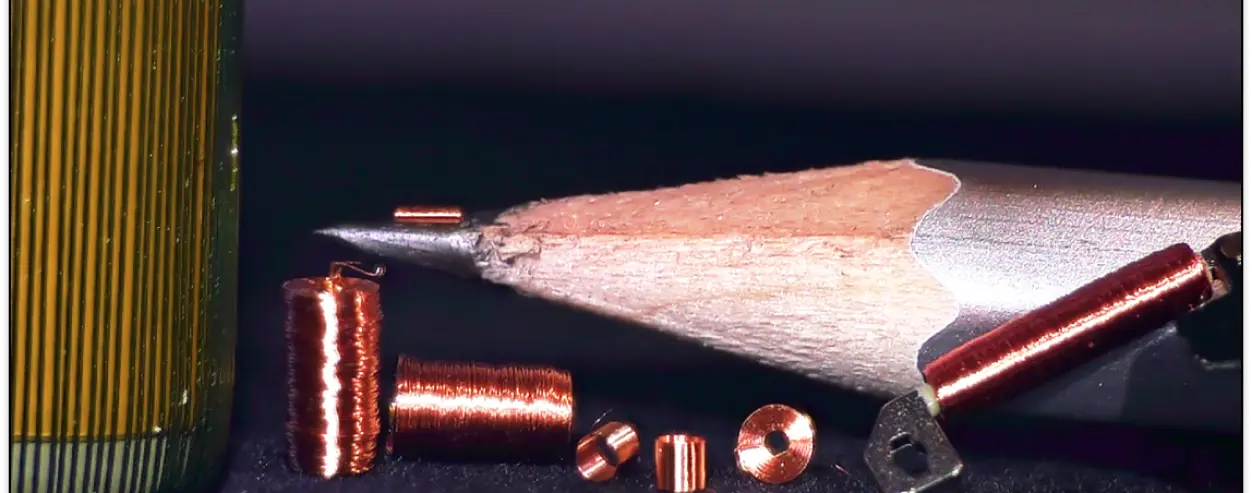
| Winding wire diameter | 10–100 µmCopper and other highly conductive materials; gold and platinum–iridium (Pt-Ir) |
|---|---|
| Coil diameter | From 75 µm on a core; from 200 µm coreless |
| Core options | Magnetic · ferrite · non-magnetic · polyimide tube · custom bobbin |
| Geometry | Cylindrical, elliptic, helical, flat-wound, toroidalWound on a core, a bobbin or coreless; 1D, 2D and 3D shapes and flat spirals |
| Protection | Coatings or potting on requestAgainst moisture, temperature extremes, vibration and mechanical stress; silicone embedding for implantable applications |
Configurations
Available construction approaches. Specify the geometry and materials your design requires.
Applications include MRI coils for imaging specific body regions, MEMS sensors and actuators, miniature transformers, inductors and motors, and other space-constrained components that need precise inductive properties.
Core types
Core selection depends on the required function, geometry and operating conditions.
| Magnetic core | Iron, steel or ferromagnetic alloysMaximised magnetic permeability; concentrates the flux, as in transformers, inductors and electromagnets |
|---|---|
| Ferrite core | Ceramic compounds of iron oxide (Fe2O3) with manganese, zinc or nickel oxidesHigh-frequency stability; low electrical conductivity |
| Non-magnetic core | Plastic, ceramic or glassElectrically insulating; minimises magnetic interference; mechanical support |
| Polyimide tube | Polyimide, serving as core and insulation in oneDiameter, length and wall thickness to your design |
| Custom bobbin | Plastic, ceramic or metalA stable, uniform winding platform; varnish or epoxy insulation on request |
Questions we are often asked
Diameter, length, inductance, resistance and current rating are specified for the application. Our engineers work with you to define the coil geometry and electrical requirements.
Yes. We design miniature coils with the diameter, length, shape and configuration needed for your application, taking account of the available space and performance requirements.
Materials are selected for magnetic performance, durability and precision. Soft magnetic materials such as ferrites or soft iron concentrate the magnetic flux. Copper is commonly used for its conductivity; other conductive materials are considered according to the application.
We work under ISO-certified quality management, with quality control from raw-material inspection to final product testing and continuous process improvement. Prototypes allow you to test and validate the design before series production. Inspection and acceptance requirements are agreed for your project.
Before you write
Winding geometry, wire size, core, connections and electrical requirements.
Attach a PDF or STEP drawing to your enquiry, or ask for an NDA before sharing it.
Technical detail
Coreless coils, coils wound on cores or bobbins, toroidal coils and assembled coil modules. The construction is selected to suit the shape and space available in your design.
Magnetic and non-magnetic cores, ferrite, polyimide tubes and custom bobbins are selected according to the required function, geometry and operating conditions.
Specify the winding geometry, resistance or inductance targets, wire material, connection details and any encapsulation needs. Final values and acceptance criteria belong in the agreed specification.